I.
Urban & Development Authorities
Municipal corporations, smart-city missions, regional development boards. Building plans, mutation registers, property tax files, water and sewerage records, trade licences.

DigiLekh — India’s own document intelligence
India's sovereign Intelligent Document Processing (IDP) platform. Extract every field from scanned forms, ledgers and manuscripts across 13 scripts, printed or handwritten, and deliver structured, decision-ready data. Air-gapped on your department's server. Data never leaves India.
As SOC 2, HIPAA, GDPR, and ISO certified, we ensure enterprise-grade security – your data stays yours.

Every level of the administrative apparatus runs on paper that must now run on data. DigiLekh is configured for each register: no department is too specific, no archive too old.
Municipal corporations, smart-city missions, regional development boards. Building plans, mutation registers, property tax files, water and sewerage records, trade licences.
Record rooms holding jamabandi, khatauni, patta, chitta, cadastral maps and mutation registers across every district tehsil and sub-division.
District and session courts, tribunals, commissions, regulatory authorities. Pleadings, judgements, case bundles and evidence ledgers in multiple regional scripts.
Directorates administering pensions, rations, rural employment, scholarships and subsidies. Eligibility files, beneficiary registers, life certificates, utilisation returns.
PSUs in power, railways, banking, defence electronics, oil & gas, telecom. Pay rolls, procurement files, vigilance records, stores ledgers and technical drawings.
National and state archives, oriental research institutes, manuscript missions and museum registries. Palm-leaf manuscripts, ruler-period records, rare print collections.
Side-by-side: our position versus legacy ECM platforms and global IDP tools.

Hosted in your SDC, secured by your rules.
True on-prem, air-gapped AI on your department's infrastructure or MeitY-empanelled SDC.
Built for cloud. On-prem AI deployments struggle with model updates and GPU licensing.
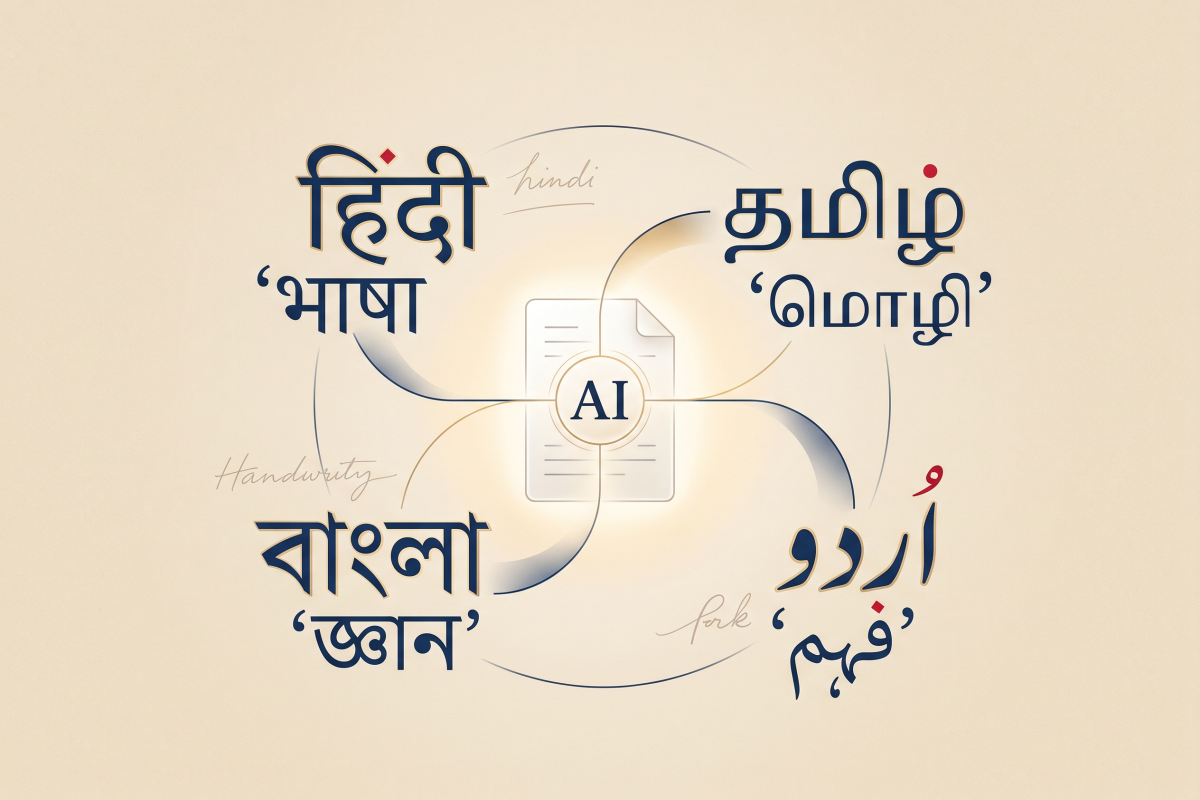
Built for 22 Bhashini languages, not retrofitted.
Native Indic engine. Handwritten Devanagari, Tamil, Bengali, Urdu. HWR-first design.
Global tools treat Indian scripts as secondary translation tasks. Accuracy falls off a cliff.
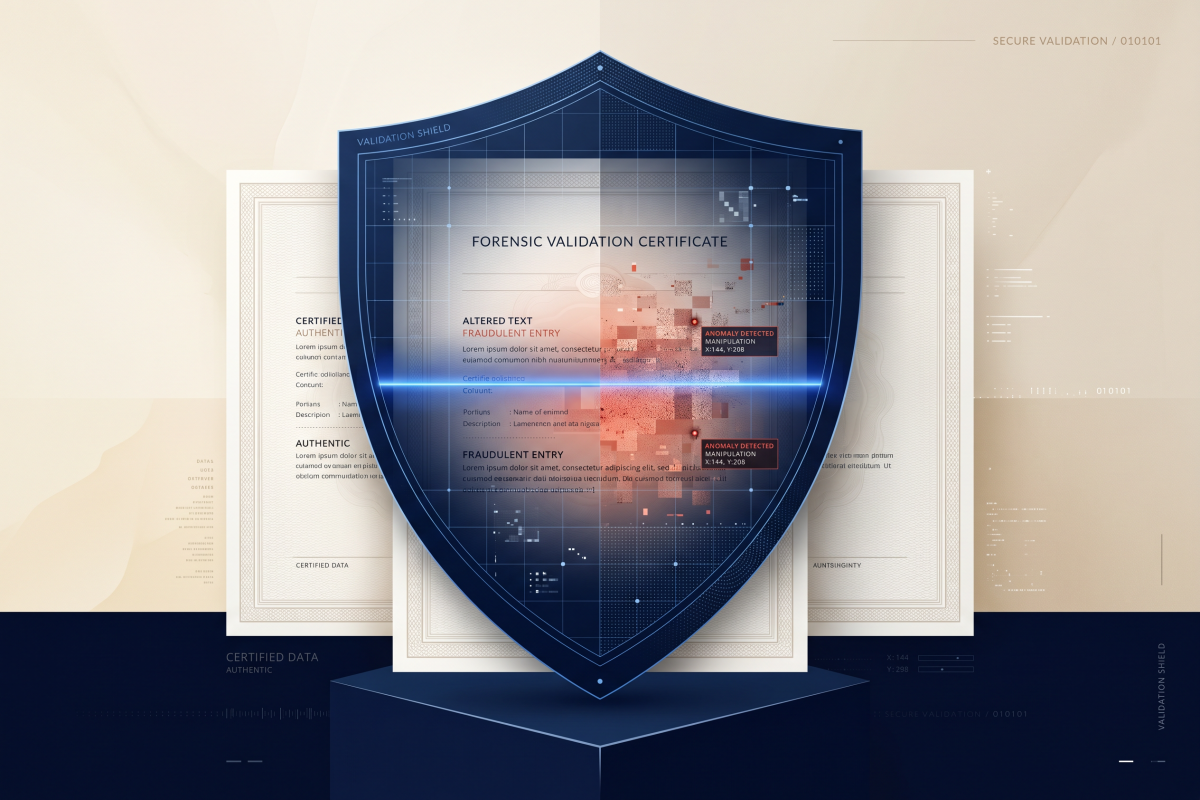
Pixel-level tamper detection at is ingestion.
ELA, JPEG Ghost Maps, synthetic-media detection. Catches fraud before workflow.
Conventional DMS has zero forensic capability. Vulnerable to GAN-generated content.
Audit logs mapped to the Indian Evidence Act.
Non-repudiation, SHA-2 hashing, digital signature integration. Court-admissible by design.
Audit trails built for international standards. Gaps around Indian Evidence Act specifics.
DigiLekh is a single source of truth across the entire document lifecycle, from the moment a page is captured to the dashboard that a secretary reads on the 1st of the month. It slots into the Government of India IT fabric: eOffice, API Setu and DigiLocker.

Archival preservation at the point of entry. A proprietary mobile and desktop scanning ecosystem that makes capture a one-time, lifetime process.
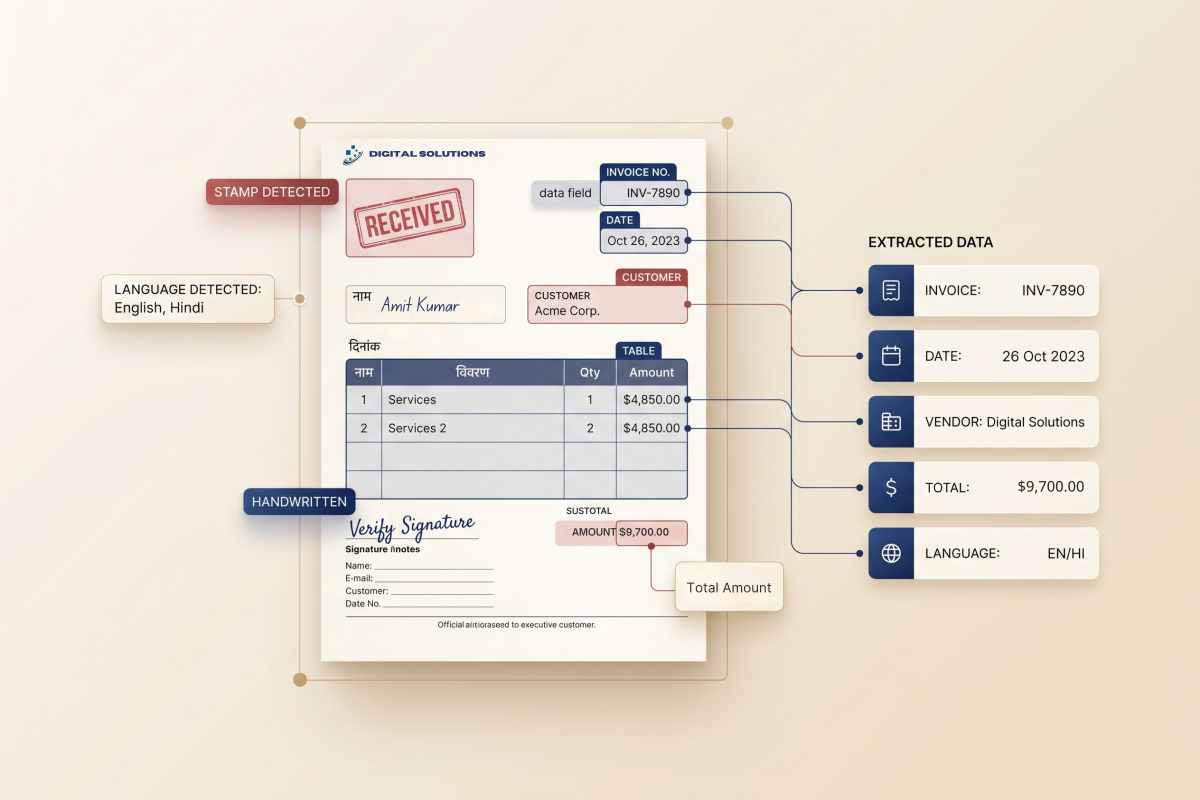
Beyond OCR. A VLM engine that understands the language of administration — forms, ledgers, notings, stamps — not just the text on them.

The first line of digital defence. DigiLekh catches manipulation before it enters the workflow — not after a grievance surfaces.
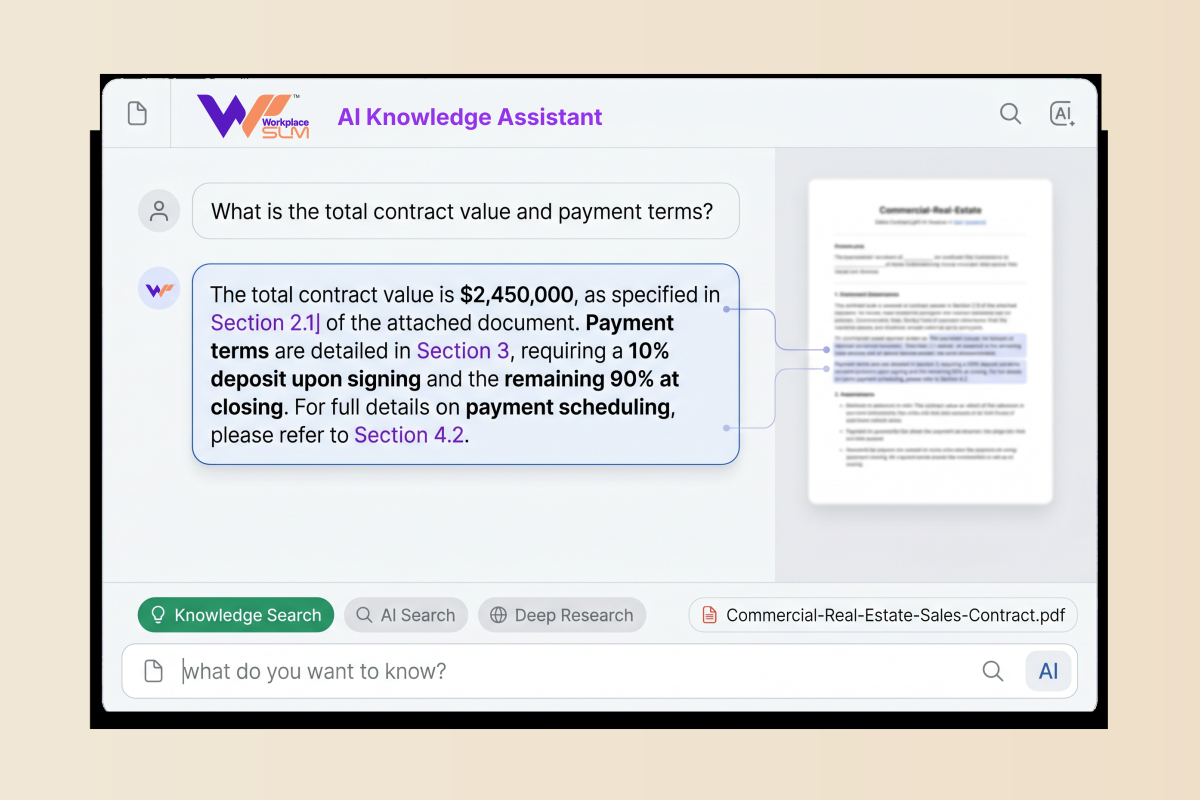
Dashboards that mirror national monitoring standards. Raw documents become decision-grade intelligence without a separate BI tool.
One sovereign pipeline. From the scanner on the ground to the monthly report on the Secretary's desk — with a forensic gate that catches tampered pages before a single record is trusted.
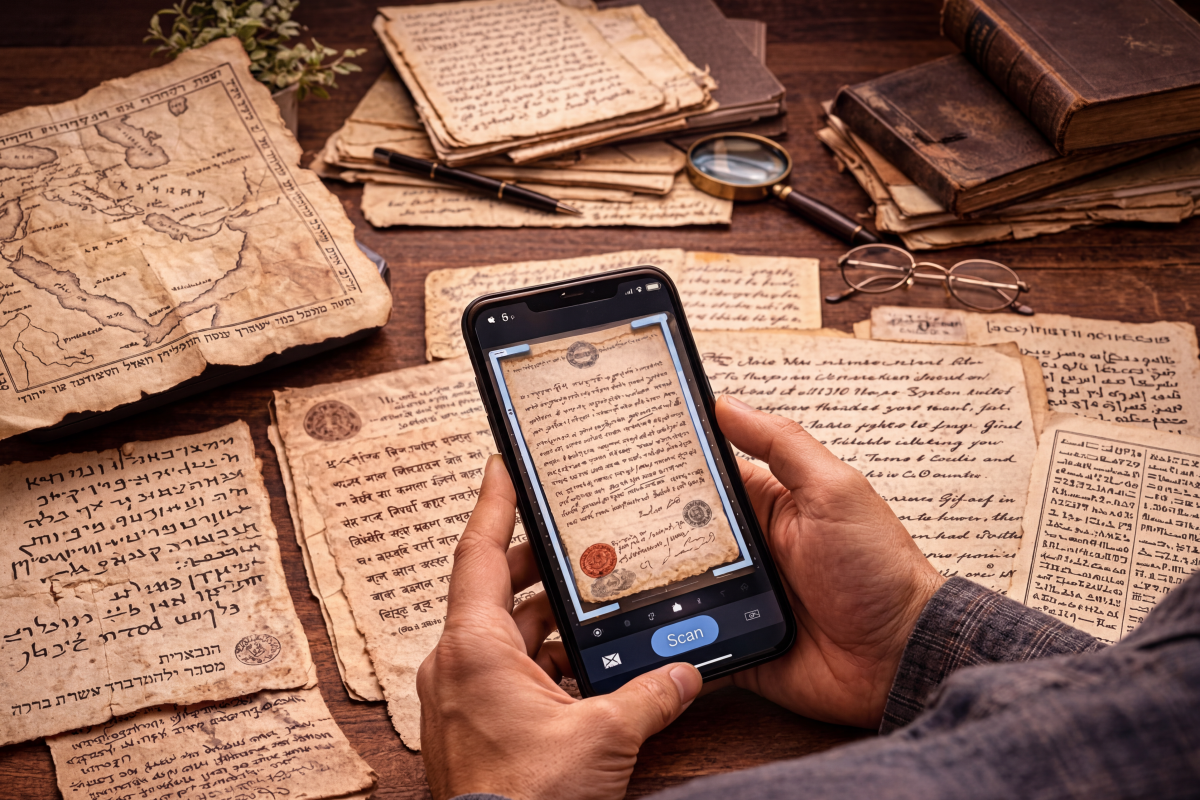
Field staff use the DigiLekh app to photograph revenue records, muster rolls, pension files, FIRs, pay slips — whatever the registry holds. Auto-deskew, auto-crop, auto-page detection. Works offline, syncs when the department VPN reconnects.
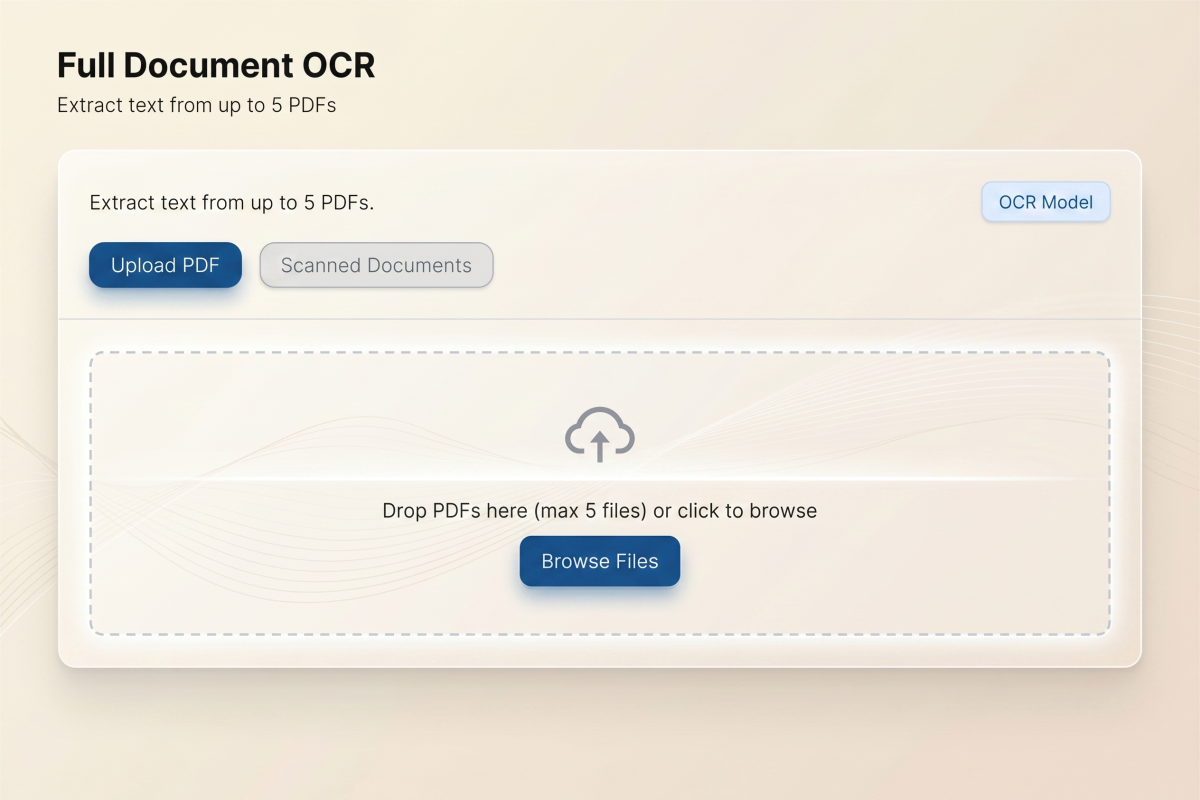
Upload a batch or point DigiLekh at an existing folder. The extraction console runs full OCR, handwritten recognition, and key-field parsing — on your department's own server or GPU. Every inference happens on-premises.
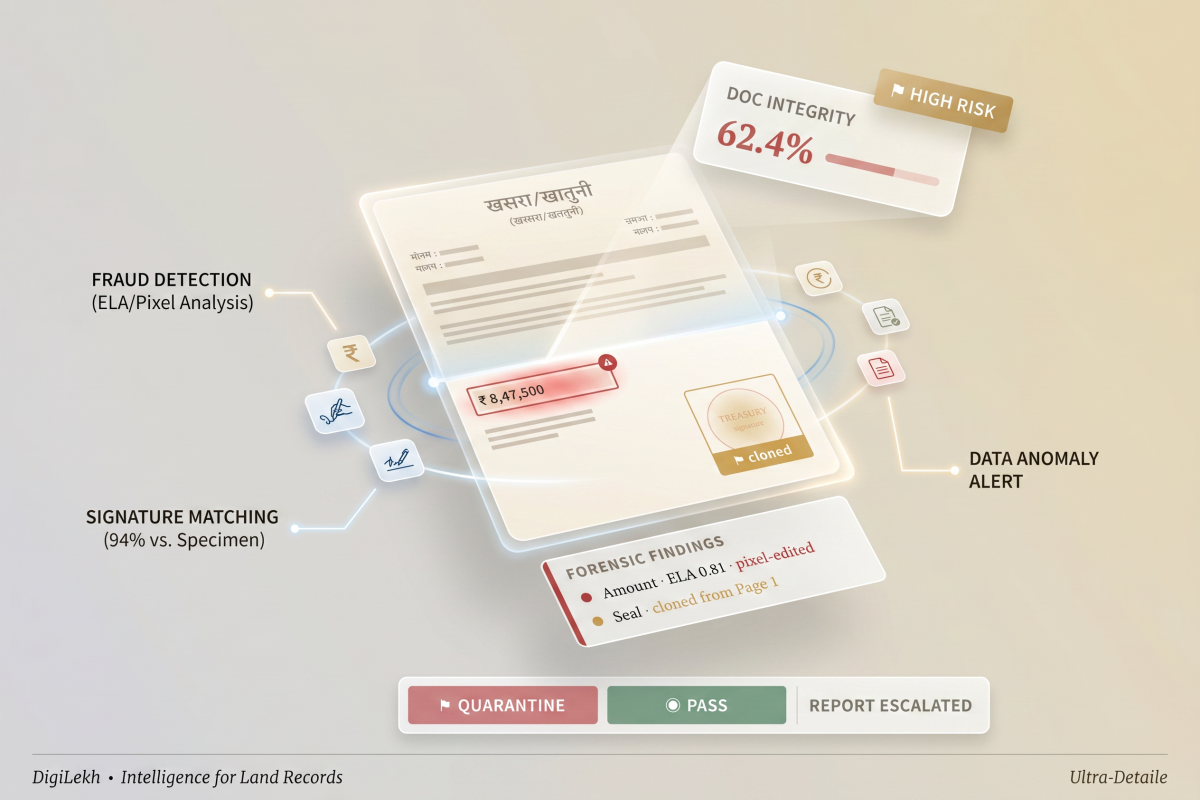
Every scanned page passes a forensic gate. At the image level — ELA tampering detection, copy-move clone analysis, seal and signature verification. At the data level — duplicate entries, amount inconsistencies, date-sequence errors. Suspect pages are quarantined and escalated with a full audit trail before any human sees a 'clean' record.
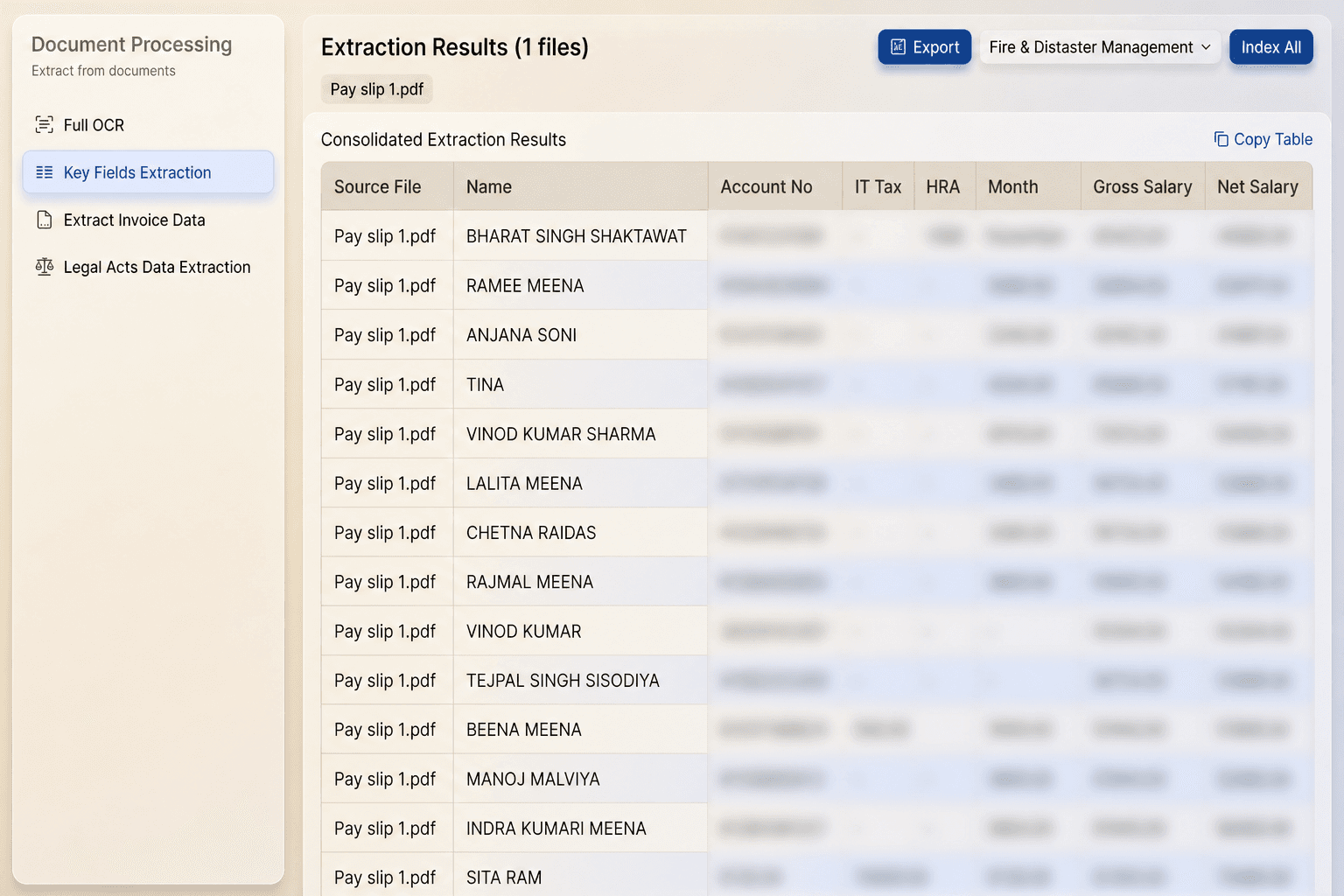
What reaches the reviewer is already validated. Consolidated results appear in a table — PII masked by default for unauthorised reviewers, confidence flagged per field, one-click export to your DMS, eOffice, or GIS. Every read is logged. Every edit is traceable.
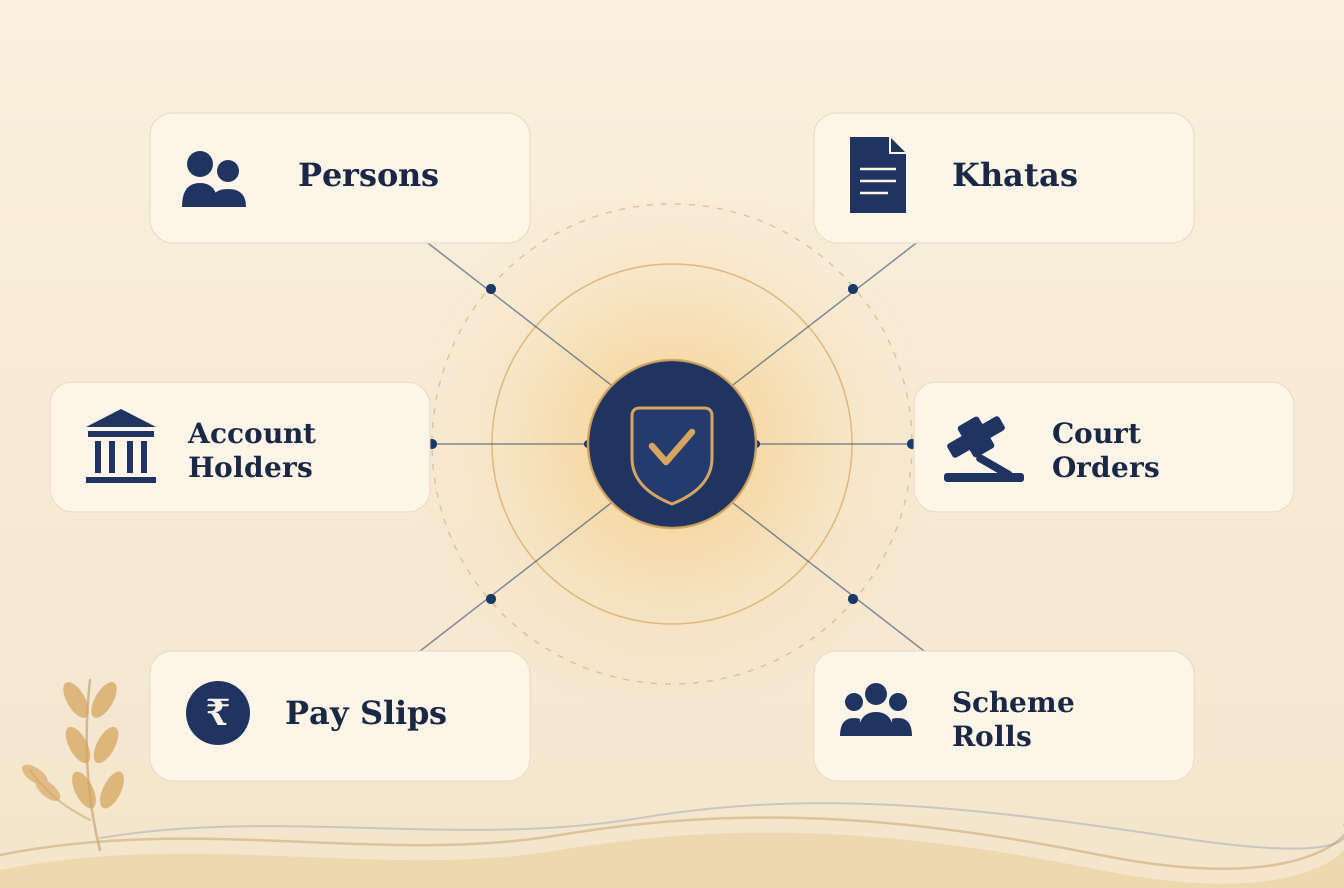
Every record becomes searchable. Entities — persons, khatas, case numbers, account holders — surface across Jamabandi, pay slips, court orders and scheme rolls. An on-premises vector database indexes 2M+ documents with sub-second query. Duplicates, inconsistencies and cross-register linkages emerge automatically.
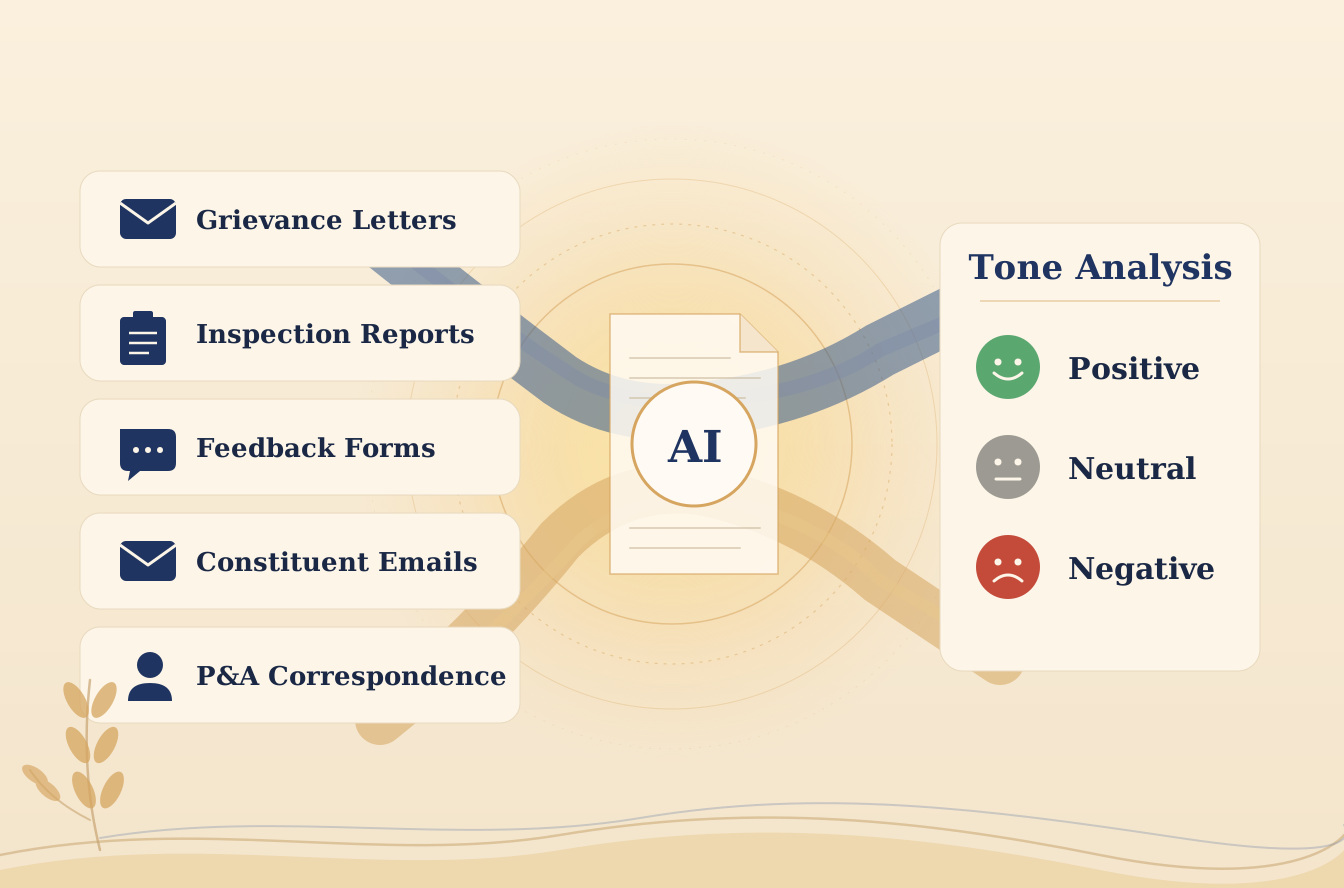
Run thousands of grievance letters, inspection reports, feedback forms or constituent correspondence through an Indic-fine-tuned sentiment engine. Tone distribution, recurring themes, critical-level escalations — routed automatically to the right desk, logged with source-letter attribution, 91.2% reviewer-agreement.
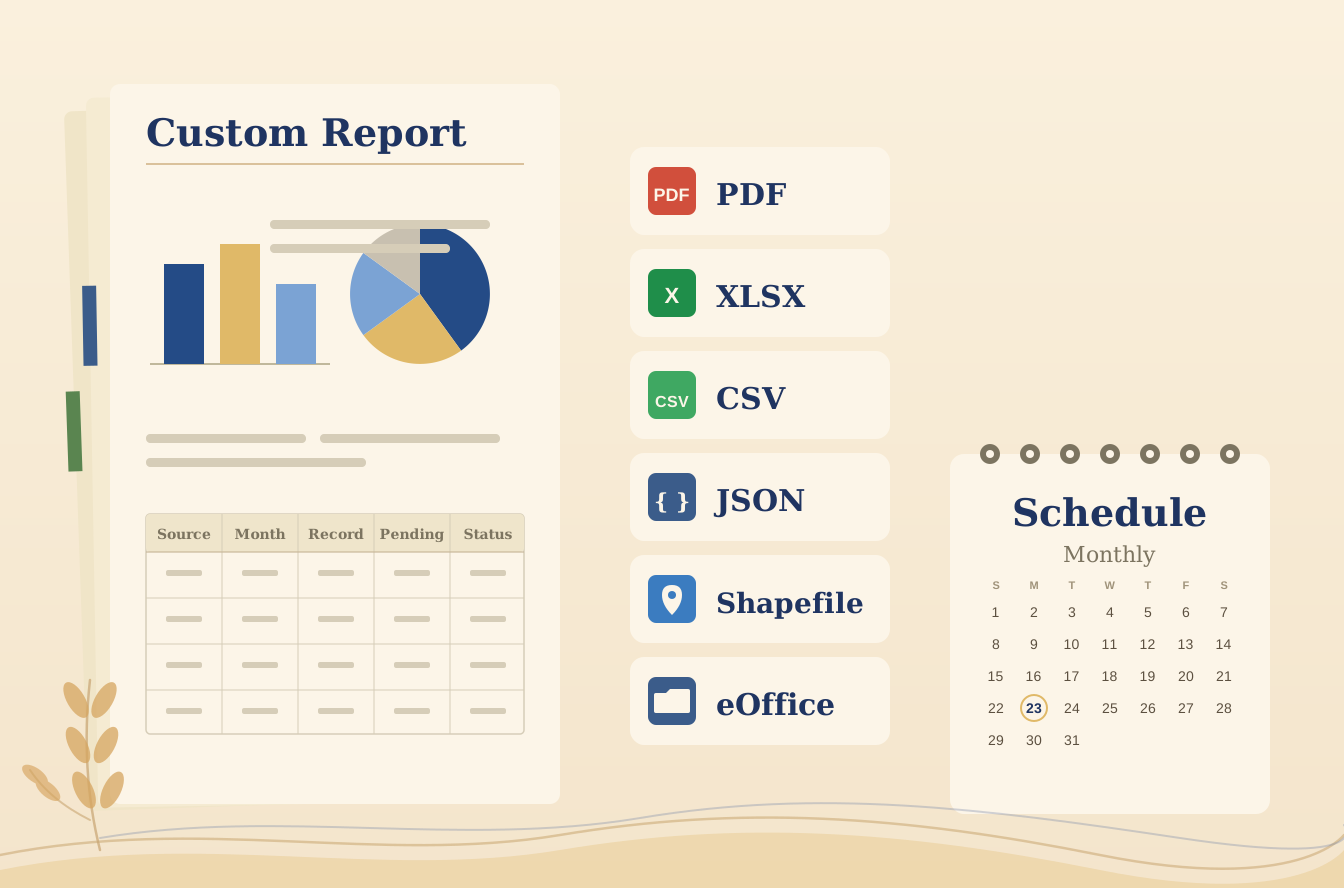
Build once, run monthly. Select columns, aggregations, filters. Export to PDF, XLSX, CSV, eOffice workflow, GIS shapefile or JSON. Schedule auto-dispatch to CAG, DDO or P&A every first of the month. Templates are department-owned, auditable, and portable across administrations.
Not "some." Not "Hindi and English, the rest soon." Every major script the Constitution recognises, and the heritage scripts the archives still hold.
+ Heritage scripts: Modi · Kaithi · Sharada · Grantha · Nandinagari · Siddham
| Text | ॐ असतो मा सद्गमय । |
| IAST | Om asato mā sadgamaya |
| Source | Bṛhadāraṇyaka Up. 1.3.28 |
| Script | Devanagari |
| Confidence | 94.2% |
The Government of India is undertaking the largest manuscript preservation effort in history. DigiLekh's handwritten text recognition handles ancient Sanskrit, Pali, Persian and regional scripts, converting fragile palm-leaf and paper manuscripts into searchable digital archives.
Most IDP vendors force a single model. DigiLekh is architected for a spectrum: from quick-start sovereign SaaS to a fully air-gapped appliance for classified workloads.
The fastest path to production. DigiLekh runs in an Indian cloud region with full platform feature parity, RBAC, DigiLocker and API Setu integrations.
For departments with sensitive data that must remain on their own metal. DigiLekh deploys to existing infrastructure or NIC-managed SDC with customer-managed storage.
A fully isolated device for classified workloads. Pre-deployed models, offline licence activation, no external APIs and no outbound telemetry.
End-to-end today, extensible tomorrow. New document types, new languages and new integrations are added as modules without replacing what already works.
Land records, court files, welfare forms, manuscripts, pay bills, FIRs - whatever your department processes.
Configure the language pack for your state. Hindi + Urdu for UP. Tamil for TN. Bengali + Santali for Jharkhand.
Define extraction fields, validation rules, approval chains and export formats specific to your process.
Structured data, searchable archives, decision dashboards and eOffice integration in the format you need.
Book a sample to have our team run a live extraction on documents you provide, or try a sample yourself with a sanitised set from your department's registry. Either way, nothing leaves your premises without your consent.
End-to-end document processing for regulated workflows. Extract, classify, and verify at scale.
DigiLekh →