
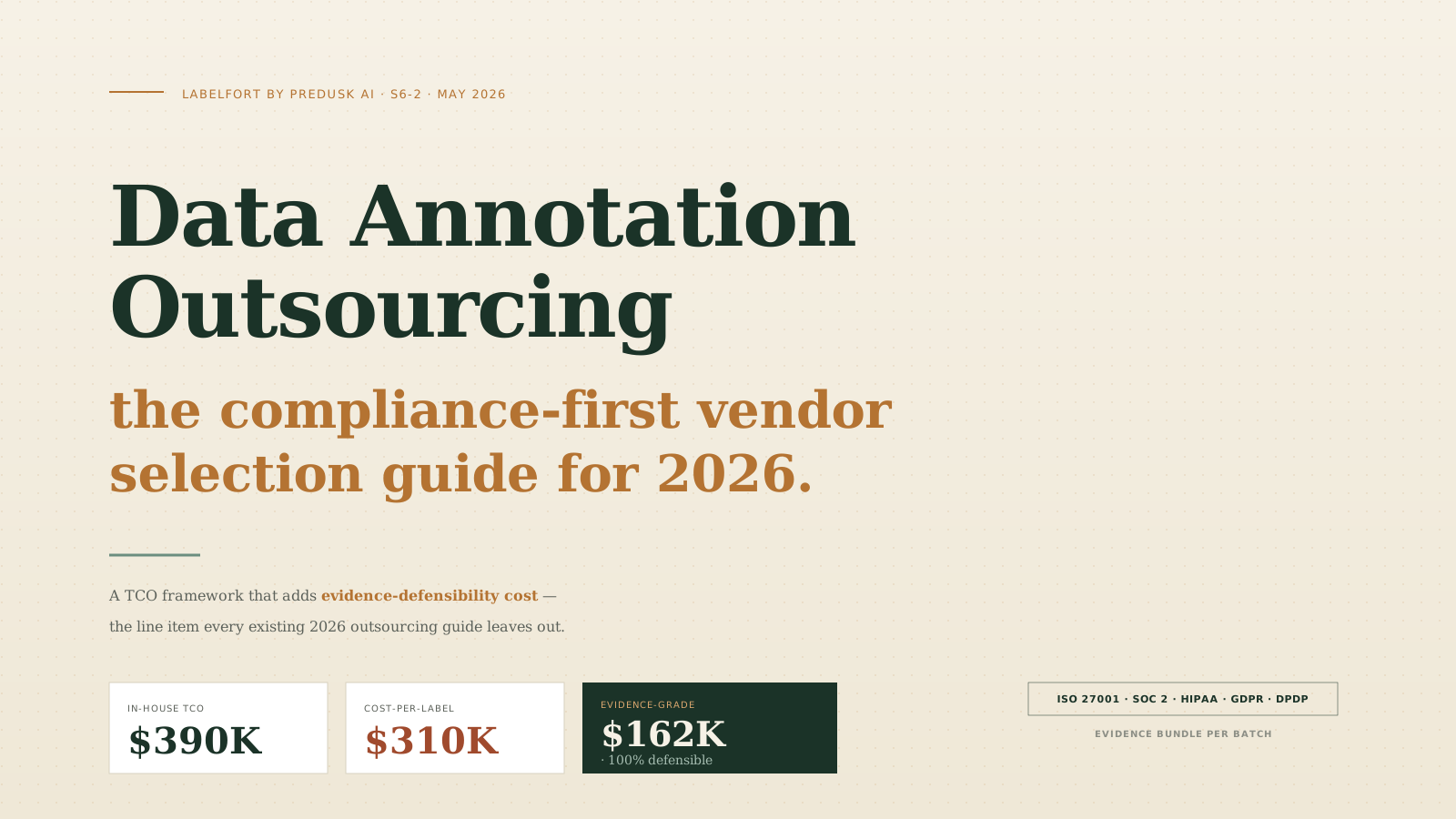

Executive summary
- What: A vendor-selection framework for buyers who have to defend their training data. Includes a TCO calculator that adds evidence-defensibility cost — the line item every existing outsourcing guide leaves out.
- The wedge: Cost-per-label is the wrong comparison metric for regulated AI. The cheap option is the one whose evidence collapses under audit. Compare cost-per-defensible-label.
- Who this is for: ML leaders, Compliance, and Procurement at enterprises shipping AI under EU AI Act, HIPAA, GDPR, SOC 2, ISO 27001, or DPDP.
- What changed in 2026: Vendor neutrality became a procurement criterion after the Meta–Scale AI arrangement; EU AI Act Article 12 made tamper-resistant logging statutory; AI-assisted pre-labelling went from optional to table stakes.
If you are running an annotation budget in 2026, the calculus has shifted. The "cheapest vendor wins" mindset is fading — most published 2026 vendor guides now lead with TCO rather than per-label list price. But almost none of them includes the cost of evidence that doesn't exist when an auditor asks for it. That is the gap this article fills.
Why outsourcing changed in 2026
Three forces converged over the last twelve months. Any vendor pitch you read that doesn't address all three is selling you the 2024 model of annotation outsourcing.
Force 1 — Vendor neutrality became a procurement criterion. After the 2024 Meta–Scale AI arrangement, Google, OpenAI, and xAI actively diversified annotation spend away from any vendor whose data could route back to a competing foundation-model lab. By Q1 2026, "who owns the vendor and where does our data end up" had moved from a curiosity question to a structured procurement gate.
Force 2 — EU AI Act Article 12 made tamper-resistant logging statutory. Effective 2 August 2026 for high-risk AI systems, Article 12 requires automatic, tamper-resistant event logging across the AI system's lifecycle. Penalties reach €35M or 7% of global turnover. India's DPDP Act Phase 2 followed in November 2026 with parallel evidence requirements and fines up to ₹250 crore.
Force 3 — AI-assisted pre-labelling went from optional to table stakes — and surfaced a new failure mode. Visual Language Model (VLM) pre-labelling reduces mechanical work by 30–60%, and Statista forecasts 60% of annotation tasks will be auto-drafted by 2027. But auto-labels that graduate to the dataset without a verified human pass are the most common new failure mode in 2026.
The traditional outsourcing decision matrix — and why it's incomplete
Most existing outsourcing guides reduce the decision to a 3-by-3 grid:
| Option | Per-label cost | Speed | Quality |
|---|---|---|---|
| In-house | High at low volume, lower at high stable volume | Slow ramp | Variable, depends on training |
| Hybrid | Medium | Moderate | Variable |
| Outsourced | Low | Fast | Variable, depends on vendor |
This grid is correct as far as it goes. It is also incomplete. It treats the dataset as a commodity you produce by the label — but the regulated-AI buyer doesn't ship the dataset alone. They ship the dataset plus the evidence that the dataset was produced defensibly. The evidence is what survives an audit, not the labels.
The same grid, recast for 2026:
| Option | Per-label | Speed | Quality | Evidence cost | Evidence-adjusted TCO |
|---|---|---|---|---|---|
| In-house | High | Slow | Controllable | Owned, expensive infrastructure | High |
| Hybrid | Medium | Moderate | Mixed | Often inconsistent | Medium–High |
| Outsourced (cost-per-label) | Low | Fast | Variable | Missing — must be reconstructed | Often higher than in-house once remediation is priced |
| Outsourced (evidence-grade) | Medium | Fast | Verified | Captured at annotation time | Lowest |
The 6 hidden costs in the cost-per-label headline rate
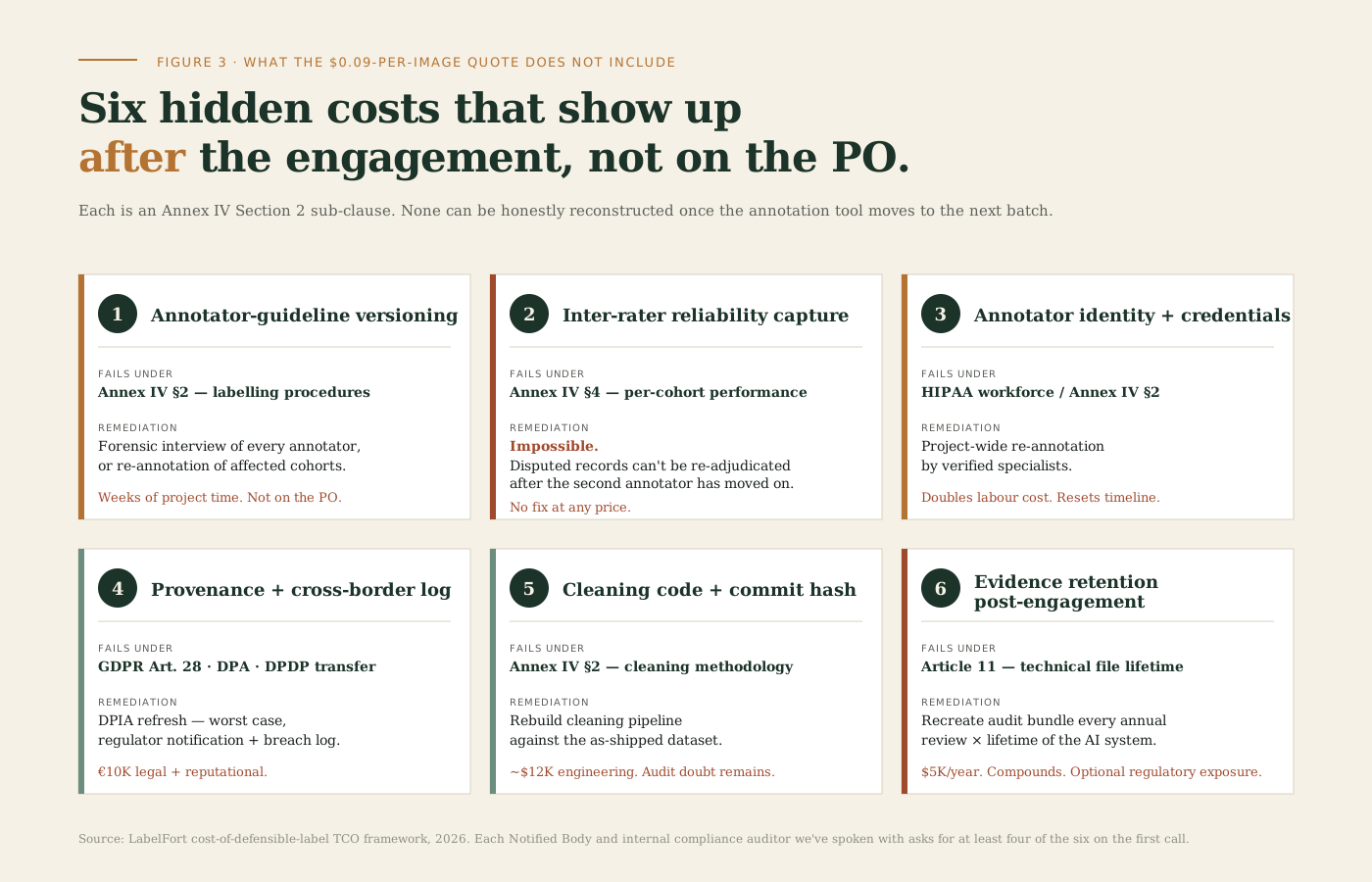
1. Annotator-guideline versioning
Section 2 of EU AI Act Annex IV explicitly requires the "labelling procedures" used. A vendor whose annotator guideline is "a Google Doc the team agrees to follow" cannot produce the version history when the audit asks which guideline was applicable to record 14,823. The cost of reconstructing this is forensic interview programmes or re-annotation.
2. Inter-rater reliability (IRR) capture
Annex IV Section 4 requires performance broken down by cohort. To meet it, your training annotation must have captured the cohort-level disagreement rate between primary and secondary annotators (Cohen's κ or Krippendorff's α), at the time the records were labelled. Adding it after the fact is impossible.
3. Per-record annotator identity and credentials
For medical, legal, financial, and safety-critical projects, the auditor will ask which qualified individual labelled which record. The remediation cost of missing identity is project-wide re-annotation by verified specialists.
4. Provenance log including cross-border transfer
If your data crossed a border to reach the annotators, your DPA and Annex IV Section 2 both need the transfer record under the lawful basis you contracted. Remediation cost is a DPIA refresh and, in worst case, regulator notification.
5. Data cleaning code and commit hash
Annex IV Section 2 requires the outlier-detection logic, de-duplication logic, and missing-value handling — applied as code with a commit hash. Remediation: rebuilding the cleaning pipeline against the as-shipped dataset.
6. Evidence retention after engagement
The technical file must be kept current for the lifetime of the system. If your vendor deletes project artefacts 30 days after final delivery, your evidence has a shelf life shorter than your audit cycle.
The ROI calculator framework
The framework has five inputs and produces three outputs: TCO, Evidence Defensibility Score, and risk-adjusted TCO.
Inputs
| Input | Range / unit | Notes |
|---|---|---|
| Dataset size N | integer (labels) | Lifetime of the engagement |
| Label complexity | basic / intermediate / specialist | Drives per-label cost |
| Cohort count C | integer | Cohorts Section 3/4 must evidence |
| Audit-risk weight r | 0.0–1.0 | r = 1.0 = annual external audit |
| Evidence retention Y | years | AI system lifetime, not engagement |
Outputs
Headline TCO = (N × per_label_cost) + onboarding + integration
Evidence cost = IRR capture + guideline version + provenance log + cleaning provenance + (retention × Y)
Risk-adjusted TCO = Headline TCO + Evidence cost + (r × audit_remediation_cost_if_evidence_missing)
Evidence Defensibility Score (0–100) = sum of 6 hidden-cost categories produced × 100 / 6. Below 70 means the dataset is not Annex IV / HIPAA Section 2-defensible at audit.
Worked example — 100K medical retinal images
A 100,000-image diabetic-retinopathy screening dataset for a Series-B health-tech going to market in the EU under Annex III.
| Line item | In-house | Cost-per-label vendor | Evidence-grade vendor |
|---|---|---|---|
| Specialist labour (100K × $1.50) | $225,000 | $150,000 | $150,000 |
| Tooling + infrastructure | $30,000 | $0 | $0 |
| Management + overhead | $40,000 | $0 | $0 |
| Compliance audit prep | $25,000 | $25,000 | $5,000 |
| Per-record annotator-ID capture | included | $20,000 retrofit | $0 default |
| Versioned annotator guideline | included | $15,000 retrofit | $0 default |
| Per-cohort IRR (6 cohorts) | $20,000 | impossible to reconstruct | $0 default |
| Provenance + cross-border log | $10,000 | $8,000 | $0 default |
| Cleaning code + commit-hash trail | $5,000 | $12,000 | $0 default |
| Evidence retention (7-yr SaMD) | $35,000 | +$35K recreate cost | $7,000 |
| Headline TCO | $335,000 | $175,000 | $155,000 |
| Risk-adjusted TCO (r = 0.9) | $390,000 | $310,000 | $162,000 |
| Evidence Defensibility Score | 95 | 35 | 100 |
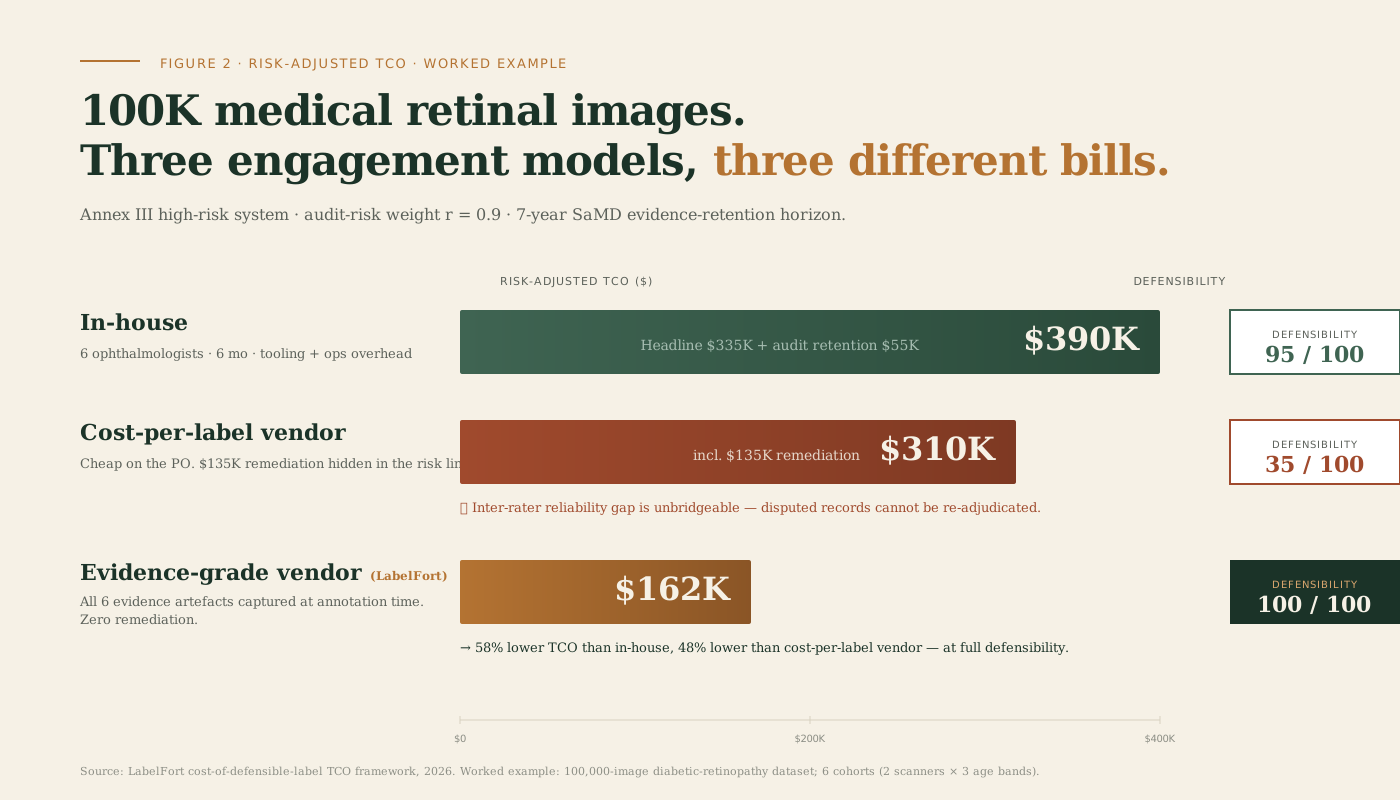
The cost-per-label vendor looks cheapest on the PO. It is the most expensive on the risk-adjusted line — and on the IRR row, there is no remediation at any price.
Vendor selection scorecard — the 12 criteria
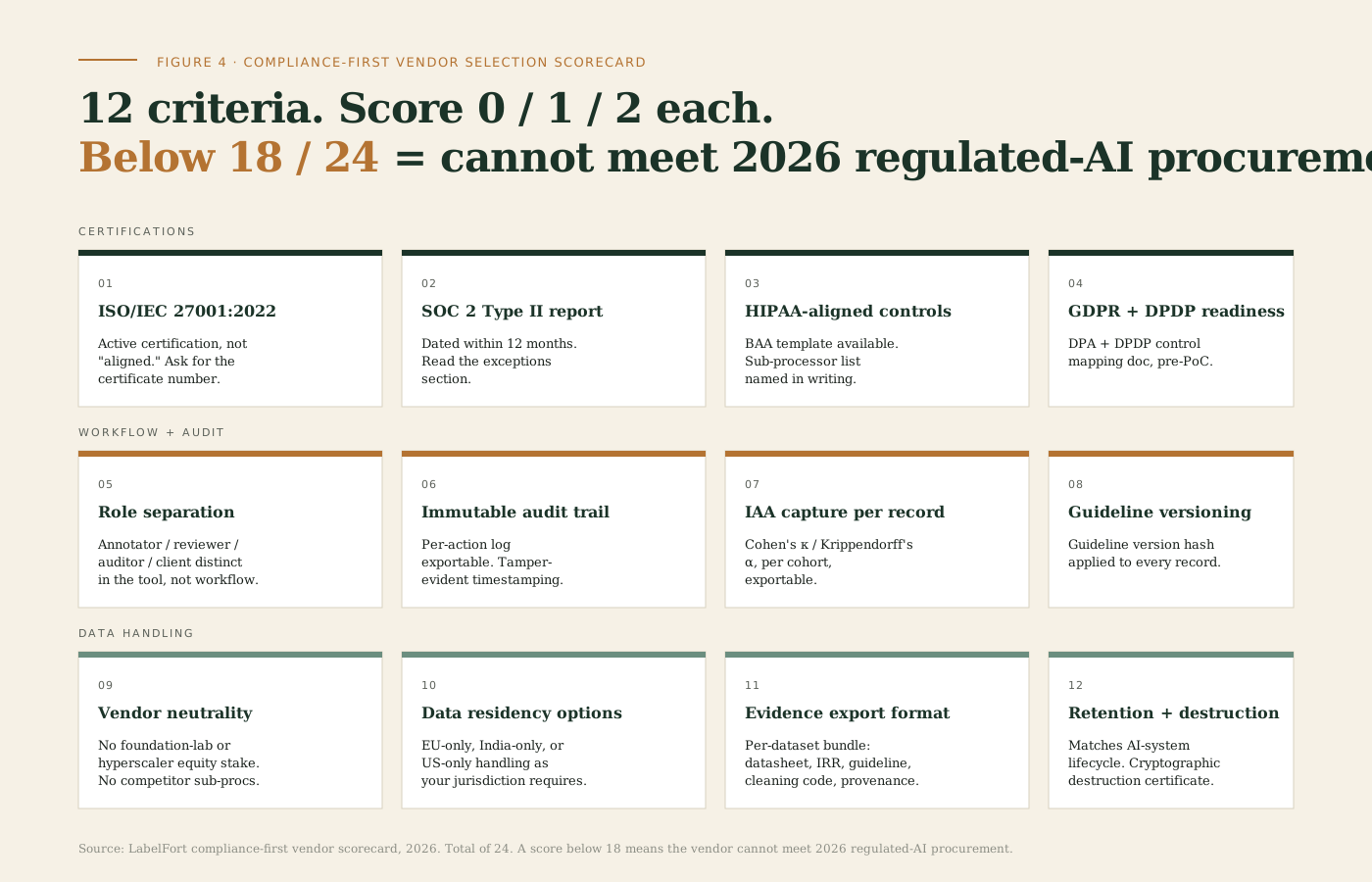
Score each 0/1/2 (absent / partial / verified). Total of 24. Below 18 means the vendor cannot meet 2026 regulated-AI procurement.
| # | Criterion | What to look for |
|---|---|---|
| 1 | ISO/IEC 27001:2023 | Active certification, not "aligned." Ask for the certificate. |
| 2 | SOC 2 Type II report | Report dated within 12 months. Read the exceptions. |
| 3 | HIPAA-aligned controls | BAA template available. Sub-processor list named. |
| 4 | GDPR + DPDP readiness | DPA + DPDP control mapping document pre-PoC. |
| 5 | Role separation by configuration | Annotator / reviewer / auditor / client distinct in the tool. |
| 6 | Immutable audit trail | Per-action log exportable. Tamper-evident timestamping. |
| 7 | IAA capture per record | Cohen's κ and/or Krippendorff's α, by cohort, exportable. |
| 8 | Versioned annotator guidelines | Guideline version hash applied to every record. |
| 9 | Vendor neutrality | No foundation-lab or hyperscaler equity stake. |
| 10 | Data residency options | EU-only, India-only, or US-only as required. |
| 11 | Evidence export format | Per-dataset evidence bundle in a documented format. |
| 12 | Post-engagement retention + destruction | Retention period matching AI-system lifecycle. |
Red flags in 2026 vendor proposals
- "We follow ISO 27001 best practices" — not the same as being certified. Ask for the certificate number.
- Single per-label price with no review-cycle breakdown — IRR cost is being absorbed into a margin that disappears in the next negotiation.
- No role separation in the platform demo — annotator and reviewer are the same person; fails Annex IV Section 2.
- "We can produce the audit trail on request" — assembled from logs that were not designed for export. Ask to see a real export.
- Vendor refuses to name sub-processors — a hard stop for regulated buyers.
- Per-label price below regional minimum wage equivalent — labour-ethics audit risk.
Compliance posture
Five frameworks. One annotation backbone that passes Legal, Security, and Procurement.
FAQ
Q. What's the typical cost of outsourced data annotation in 2026?
Basic image bounding boxes run $0.02–$0.10 per image; polygons
$0.05–$0.30; semantic segmentation $0.10–$1+; medical labels
$1.00–$5.00+; audio $0.50–$3.00 per minute. Hourly: $6–$12 standard,
$50–$100 medical specialist.
Q. Is outsourcing data annotation cheaper than building in-house?
At project volumes under 50K labels per month, outsourcing is
almost always cheaper on headline TCO — typically 3–7× lower than
building internal capacity.
Q. How do I evaluate data annotation vendors for compliance?
Use the 12-criterion scorecard above. The criteria most buyers
underweight are role separation (#5), IAA per-record capture (#7),
vendor neutrality (#9), and post-engagement retention (#12).
Q. What changed in data annotation outsourcing in 2026?
Three forces. Vendor neutrality became a procurement criterion.
EU AI Act Article 12 made tamper-resistant event logging statutory.
AI-assisted pre-labelling went from optional to table stakes.
Q. Should I be worried about my data going to a competing
foundation-model lab?
Yes. Confirm in writing: the vendor's ownership structure, data
segregation, retention after engagement, and sub-processor access
rights.
Q. Can outsourced annotation produce EU AI Act Annex IV evidence?
Only if the vendor captures the evidence at annotation time. See
our Annex IV pillar for the
full sub-clause map.
Q. What's the right engagement model for evaluating a new annotation
vendor?
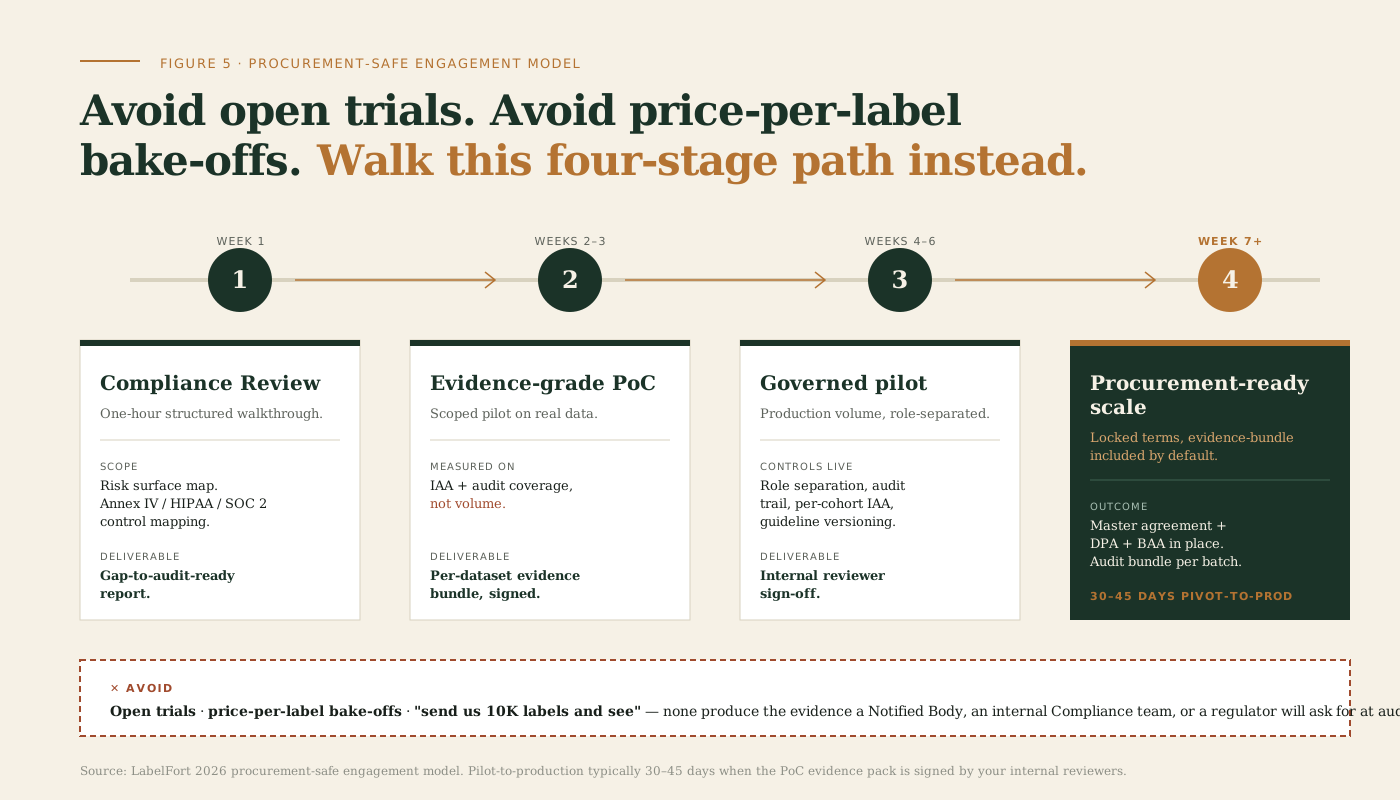
Compliance Review → evidence-grade PoC → governed pilot →
procurement-ready scale. Pilot-to-production typically runs 30–45 days.
Next step
Ready to evaluate your vendor against the 12-criterion compliance scorecard?
We help AI teams run the procurement-safe motion above. Start with a Compliance Review — a one-hour structured walkthrough where we map your risk surface to LabelFort's controls and scope an evidence-grade PoC on your real data. No open trials, no price-per-label comparisons.